
Choosing a domain name for your business is a high-stakes decision.
A well-crafted domain becomes an incredible brand multiplier—making your product discoverable, memorable, and effortlessly shareable. On the flip side, picking a clunky or generic web address can cripple your word-of-mouth marketing before you even launch.
Over 99% of first-time founders make a critical mistake: they search for random keywords, panic when the .com is taken, and settle for an awkward alternative that they regret just months later.
Top technology giants and industry leaders don't pick web addresses by accident. Companies like Amazon, Walmart, SpaceX, and Neuralink leverage cognitive psychology principles to forge unforgettable names. They isolate powerful root words—like amaz from amazing—and group them into distinct, high-impact brand identities.
Combining psychological frameworks with an intelligent platform like BoltWeb makes securing your web address seamless. With BoltWeb, you can enter your chosen domain, check availability instantly, deploy search-optimized sales copy, and publish a lead-ready storefront in under 60 seconds.
Here is your complete framework to finding, testing, and securing a fruitful domain name that accelerates your business growth.
The Strategic Naming Framework
| Naming Dimension | High-Impact Domain | Weak / Risky Domain |
|---|---|---|
| Cognitive Fluency | Instant recall, zero spelling confusion | Hyphens, numbers, awkward phonetics |
| Brand Elasticity | Broad scope that allows future growth | Hyper-specific service or geographic limits |
| Audience Resonance | Strong emotional and authority cues | Vague corporate buzzwords or filler |
| Legal Protection | Clean trademark clearance, zero overlap | High risk of trademark infringement |
1. A Good Domain Name Makes Sense Before You Explain It
Your web address serves as the front door to your business. If a prospective client has to pause and puzzle over what your web address means, you have already lost their attention.
What makes a good domain name comes down to cognitive ease:
Selecting a name with strong good domain name characteristics establishes immediate authority, ensuring visitors perceive your brand as an industry leader before they even view your homepage.
2. Make It Easy to Say, Spell, and Remember
Test your idea with the "Radio Test": Imagine saying your domain name out loud over a radio broadcast. Would listeners know exactly how to type it into their browser address bar without asking for the spelling?
To secure a memorable domain name, evaluate these visual and phonetic standards:
- Spelling Simplicity: Choose an easy-to-spell domain name that avoids double letters (like pressstart), silent vowels, or unusual spellings.
- Phonetic Ease: Pick an easy-to-remember domain name that rolls off the tongue without verbal stumbling.
- Short Character Count: Aim for 2 to 3 words max to make word-of-mouth sharing effortless.
Reducing the mental effort required to recall your web address ensures clients return to your site time and time again.

3. Make the Name Fit the Business Without Describing Every Service
Founders often feel forced to choose between a strictly descriptive address or a purely abstract brand name.
Evaluate the trade-off carefully:
- Descriptive Domain Name: Tells people what you do instantly (DallasRoofing.com), but limits your expansion if you offer solar installations later.
- Brandable Domain Name: Creates a distinctive identity (ApexVault.com) that leaves unlimited room for product line growth.
Balancing immediate clarity with brand flexibility yields a powerful business domain name that accommodates future market pivots.
4. Check What the Name Sounds Like When Customers Say It Out Loud
A name that looks perfectly fine on a written page can turn awkward when spoken in daily conversation.
Say your top candidates out loud in real-world scenarios:
- "Visit us at..."
- "Send an email to hello@..."
- "Check out our work on..."
Studying good domain name examples reveals that catchy domain names rely on strong phonetic rhythm. Following field-tested domain naming tips prevents embarrassing mispronunciations down the line. For broader naming strategy, read our guide on how to choose a domain name for your business.
5. Choose Words That Match the Expectations You Want to Create
Your web address shapes customer expectations before they read a single line of copy. Using powerful root words evokes specific feelings of strength, security, speed, or innovation.
To generate business domain name ideas, apply these proven psychological associations:
| Domain Idea | Psychological Association | Brand Narrative |
|---|---|---|
| Forgehaven | Strength + Safe Harbor | Built for reliable growth |
| Ironweave | Versatility + System Strength | Unshakeable multi-solution capability |
| Brightforge | Intelligence + Creation | Driven by smart visual design |
| Vaultspring | Security + New Energy | Protecting assets while scaling fast |
Selecting a professional domain name establishes instant credibility, reassuring high-intent buyers that they are dealing with a trustworthy domain name authority.
6. Decide Whether Numbers, Hyphens, or Unusual Spellings Help or Hurt
When a founder discovers their dream address is already registered, the temptation to add hyphens, numbers, or quirky misspellings is strong.
Here is the plain truth:
Avoid these high-friction choices at all costs:
- Domain Name with Hyphen: Creates verbal confusion ("Is that with a dash or no dash?") and sends traffic to your competitors.
- Numbers in Domain Names: Causes spelling confusion ("Is that the digit 4 or spelled out four?").
- Quirky Spellings: Swapping Clean for Klean forces you to constantly correct clients.
Avoiding common domain name mistakes protects your brand equity and prevents lost web traffic.
7. Choose an Extension That Supports the Name
"Is the name still a good choice if the .com version is unavailable?"
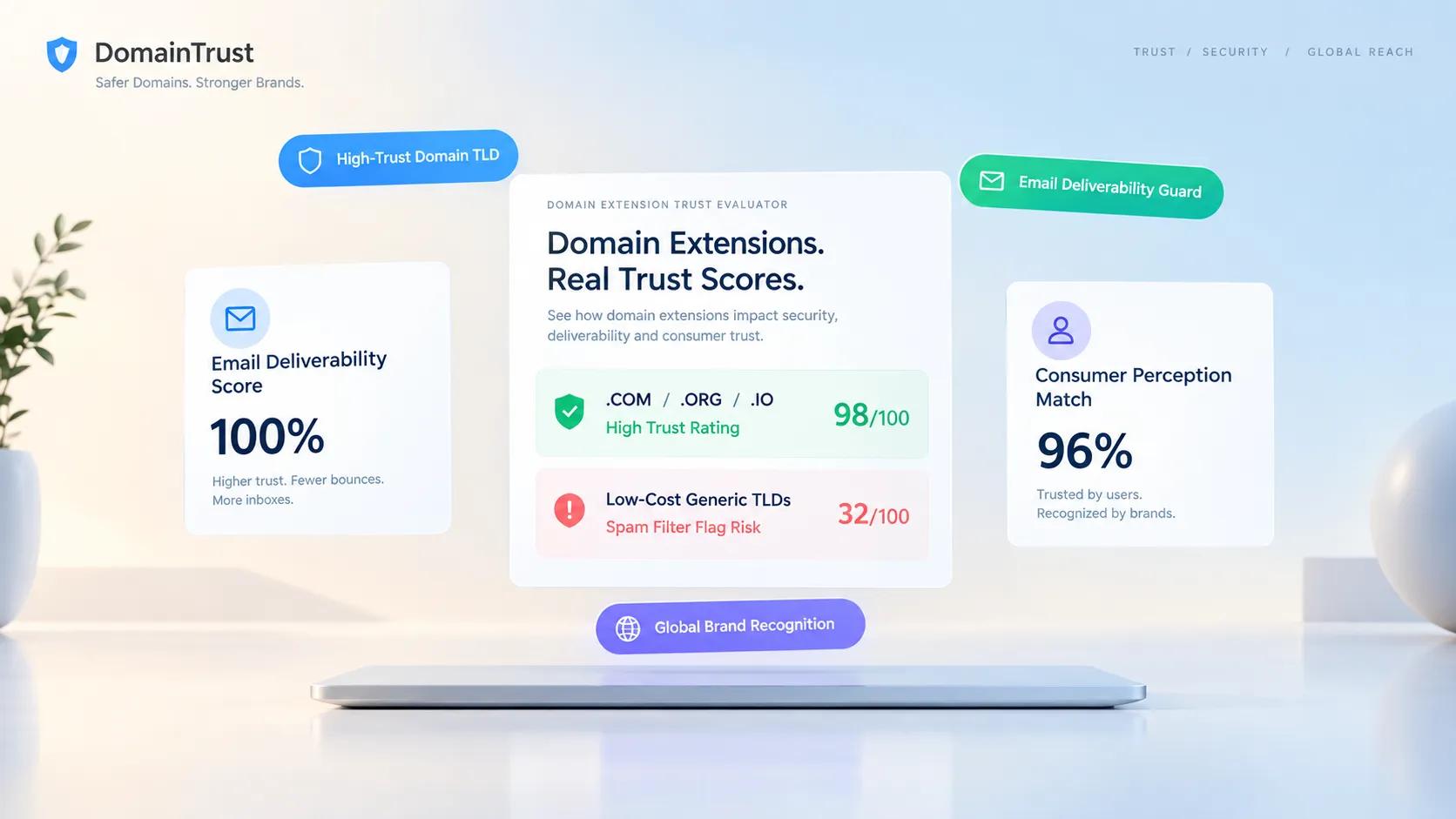
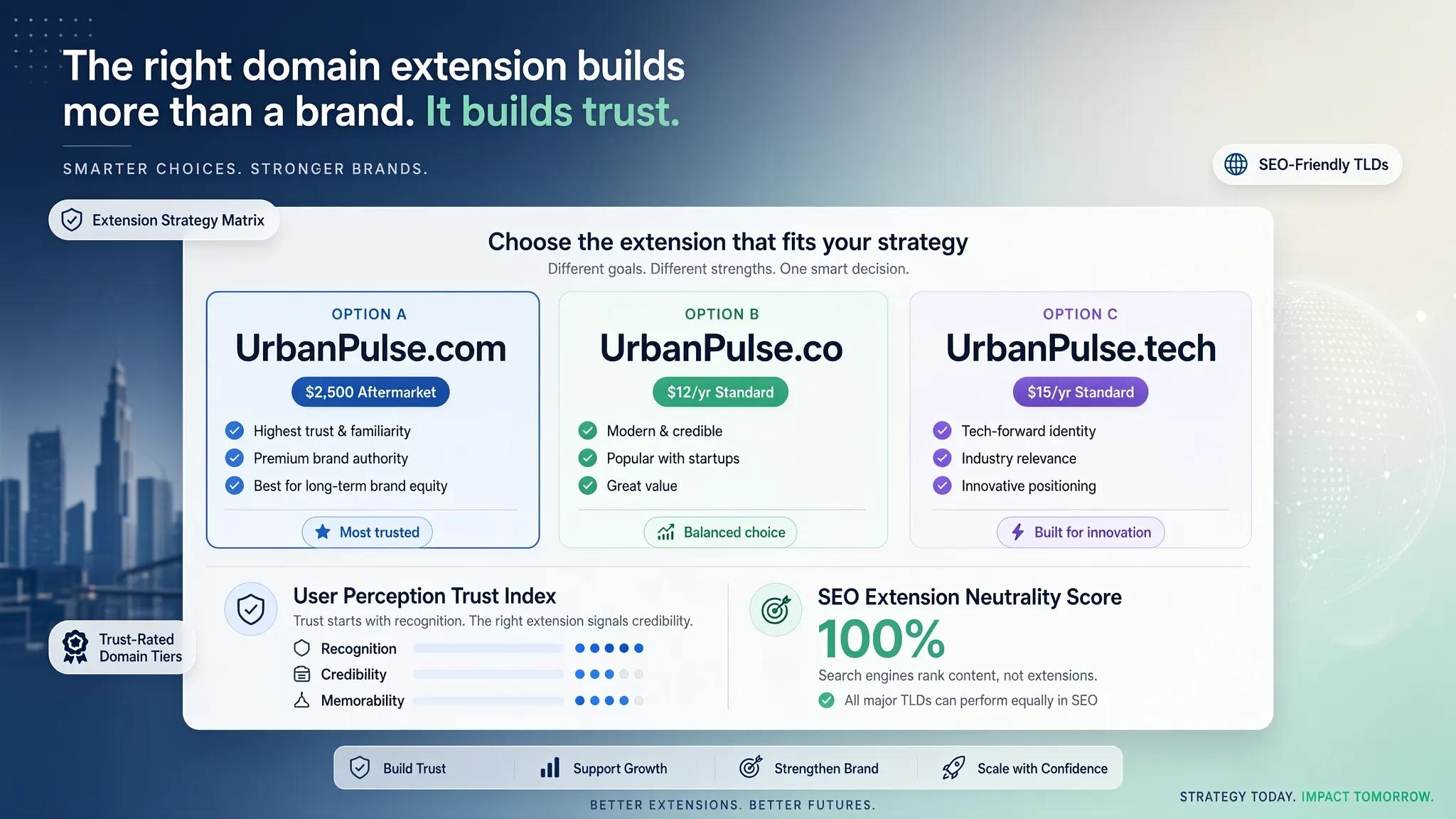
While hundreds of modern domain extensions exist today, user habits remain deeply ingrained.
- • .com Domain Extension
- • Highest baseline trust
- • Universal global awareness
- • .co / .io / .ai Extensions
- • Popular for SaaS & Tech
- • Requires strong branding
Securing a .com domain name remains the undisputed gold standard for trust. However, if you run a tech or AI company, selecting a modern good domain extension like .co, .io, or .ai can serve as a viable alternative (explore launch steps in our guide on how to do SEO for a new website). For extension selection guidance, read our article on how to choose a domain extension.
8. Make Sure the Name Can Grow With the Business
A web address like AustinCarpetCleaner.com works well when you start out in a single city. But what happens when you expand to three neighboring towns or add tile restoration to your offerings?
Ensure you choose a flexible domain name:
- Avoid Narrow Geographic Constraints: Skip city or state tags unless you intend to stay hyper-local permanently.
- Avoid Niche Product Locks: Leave room to introduce supporting product categories.
Choosing a scalable business name gives your brand room to expand into multi-million dollar operations without forcing an expensive rebrand later.
9. Check for Conflicts Before Customers Start Recognizing the Name
Investing thousands of dollars in marketing a new brand name—only to receive a legal cease-and-desist letter—is a nightmare scenario.
Run thorough conflict checks before committing:
- USPTO Trademark Search: Inspect official trademark databases to ensure your mark isn't claimed in your business class.
- Social Media Handle Check: Confirm matching handles are available across major platforms.
- Local Entity Search: Check official state Secretary of State registries for business name availability.
Running a comprehensive domain name trademark audit protects your marketing investment and eliminates legal risks. For site protection tips, read our guide on making your website more secure.
10. Test Your Shortlist With People Who Don't Know Your Business
To move beyond personal bias, test your top domain candidates with people outside your inner circle.
How to run a 24-hour domain sanity check:
- The Text Test: Message your candidate name to five friends without explanation. Ask them to pronounce it out loud.
- The Recall Test: Ask them 12 hours later to type the domain from memory.
Following this real-world feedback loop reveals how to choose a good domain name based on real user recall rather than gut guesswork. Use these domain name ideas for business research methods to discover memorable business names.
11. Compare Your Best Options Against the Same Criteria
When you narrow your choices down to two strong finalists, use a structured scorecard to make an objective decision:
| Evaluation Criteria | Max Points | Score (Candidate A / B) |
|---|---|---|
| Easy to spell & pronounce | 25 Points | ____ / ____ |
| Short & memorable (under 15c) | 25 Points | ____ / ____ |
| Flexible for future growth | 25 Points | ____ / ____ |
| Clean trademark & handles | 25 Points | ____ / ____ |
| Total Brand Power Score | 100 Points | ____ / ____ |
Utilizing a structured good domain name checklist provides decision closure, ensuring you pick the winner backed by clear data.
12. Secure the Domain Before You Build Your Brand Around It
Once you find an available web address that passes your testing criteria, secure it immediately before someone else registers it.
How to generate ideas and secure your name seamlessly:
- Leverage AI Brainstorming: Prompt tools like ChatGPT or Gemini using powerful root words and your brand narrative ("Give me 20 brandable 2-word domain ideas using root words like forge, spring, or craft for a software platform").
- Verify Domain Availability: Enter your candidates directly into BoltWeb to perform an instant domain name availability check.
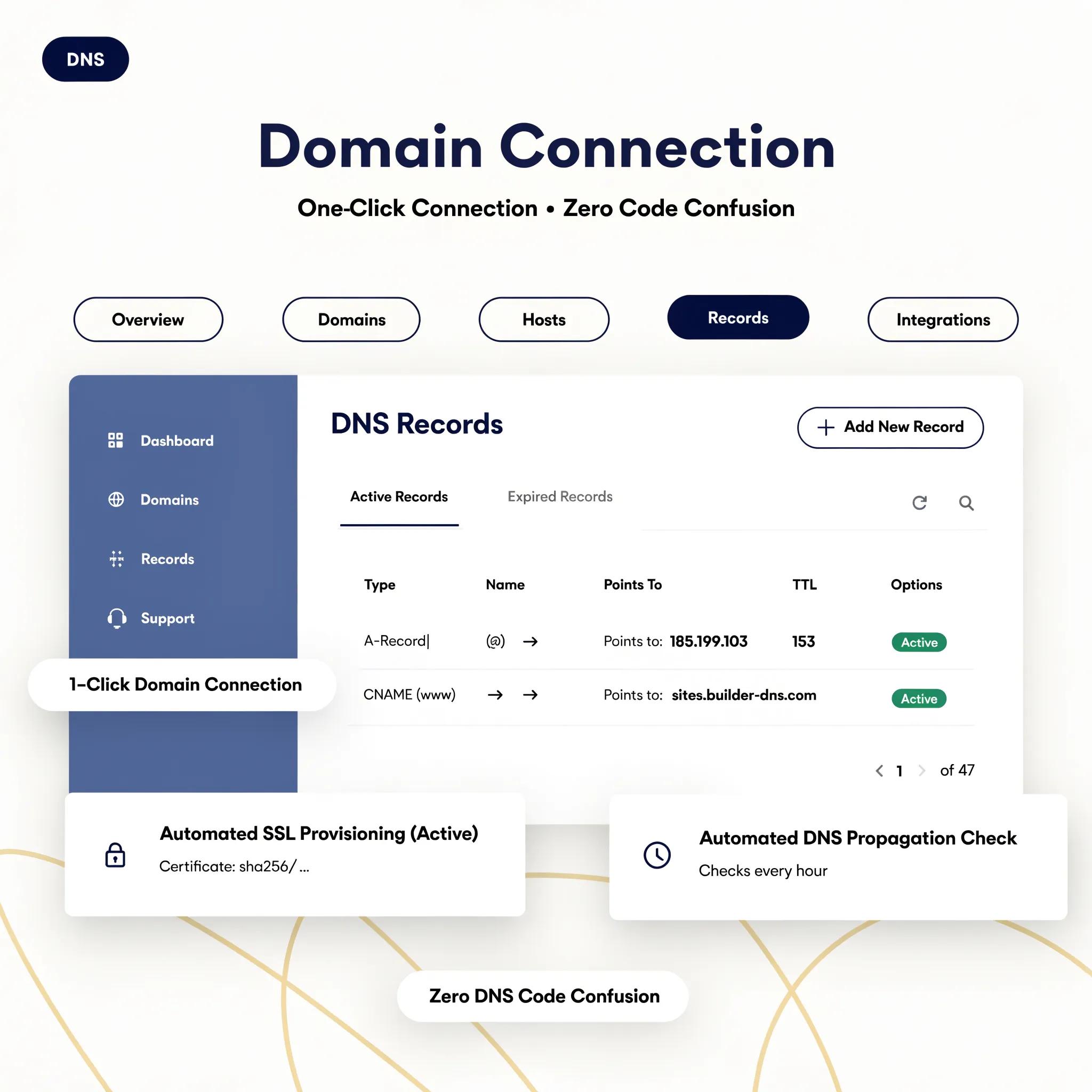
- Secure and Connect Instantly: Once verified, register a domain name or buy a domain name via your preferred registrar (such as GoDaddy or Namecheap), then connect it to BoltWeb using an effortless two-line DNS configuration!
Launch Your Custom Domain Storefront Today: You don't have to wait weeks to build a high-converting digital presence. Complete your domain registration for business setup, connect your address to BoltWeb, and launch an AI-powered, search-optimized storefront in under 60 seconds!
FAQs: What Makes a Good Domain Name
1. What makes a good domain name for a business website?
Here's the plain truth:
A good domain name is built on instant cognitive ease, authority, and phonetic clarity. It acts as an unshakeable brand multiplier that people can spell, say, and remember without hesitation.
If your web address requires constant spelling corrections over the phone or uses clunky hyphens, prospective clients will bounce before viewing your offer. Connecting your address to BoltWeb bridges the gap between naming and conversions. As an all-in-one business website builder, BoltWeb allows you to link your custom address, write search-optimized sales copy, and publish a responsive storefront in under 60 seconds.
2. What are the key good domain name characteristics I should look for?
When evaluating web addresses, look beyond simple availability and judge your candidate against core psychological standards.
Apply the Job-to-Be-Done (JTBD) framework to evaluate domain power:
- Instant Phonetic Fluency: Rolls off the tongue naturally without verbal stumbling or spelling confusion during phone calls.
- Unshakeable Brand Authority: Evokes strength, trust, and professionalism before a visitor reads your headline.
- Long-Term Elasticity: Leaves unlimited room for product line expansion and geographic growth.
Ensuring these core characteristics are present guarantees your web address serves as a lasting marketing asset.
3. How do I make sure I pick a memorable domain name that clients don't forget?
If someone hears your web address once during a conversation or radio ad, will they remember how to type it into their browser hours later?
To secure a memorable domain name, focus on these visual and phonetic benchmarks:
- Short Character Count: Aim for 2 to 3 words maximum to make social sharing effortless.
- Zero Spelling Obstacles: Avoid silent vowels, double letters, or unusual spelling swaps.
Choosing easy-to-remember domain names ensures prospective clients arrive at your storefront without getting lost on competitor sites.
4. Why is having an easy-to-spell domain name so critical for client conversions?
A common trap founders fall into is selecting a clever or quirky domain that proves impossible for everyday buyers to spell correctly.
Why spelling simplicity directly impacts your revenue:
- Word-of-Mouth Protection: An easy-to-spell domain name prevents lost referrals when clients recommend your business to friends.
- Frictionless Navigation: Keeps direct search traffic moving straight into your lead pipeline without hitting dead 404 error screens.
Eliminating spelling obstacles protects your marketing investments and maximizes direct website traffic.
5. Should a good domain name be brandable or descriptive?
Deciding whether your web address should describe your exact service or deliver a distinct brand identity depends on your growth strategy.
Weighing your options across proven naming frameworks:
- Brandable Domain Name: Uses evocative or engineered terms (like Averon, Veltrix, or Truehorizon) to deliver an exclusive identity that you own completely.
- Descriptive Domain Name: Tells buyers what you sell instantly (DallasRoofing.com), but limits expansion if you add new services later.
Choosing a balanced business domain name gives your company room to grow into multi-million dollar operations.
6. Can you give me good domain name examples that follow winning naming frameworks?
Top SaaS platforms and global brands construct unforgettable names by grouping high-impact root words that evoke authority and momentum.
Study these field-tested naming structures:
- Evocative Iconic Names: Firstlight, Northstar, Daybreak, Truevista (evokes trust and direction).
- Engineered Coined Names: Veltrix, Nexora, Zenvora, Kavora (evokes high-tech precision and scale).
- Descriptive Hybrids: Craftsignal, Brightforge, IdeaFoundry (combines industry clarity with brand flexibility).
Inspecting good domain name examples helps you discover catchy domain names using proven domain naming tips.
7. What makes a professional domain name project immediate authority?
Your web address shapes customer expectations before they read a single sentence on your homepage.
Key elements that establish a professional domain name:
- Clean Extension: Pair your name with an established suffix like .com or .co.
- Dignified Tone: Avoid internet slang, buzzwords, or informal abbreviations.
Selecting a trustworthy domain name reassures high-intent buyers that they are dealing with a reputable market leader.
8. Why are numbers, hyphens, and spelling tricks major domain name mistakes?
When a founder finds their ideal address registered, the urge to insert dashes or numbers is strong.
Here is the plain truth:
Avoid these high-friction domain pitfalls:
- Domain Name with Hyphen: Addresses like Plumb-Craft.com sound cheap, create verbal confusion over the phone, and drive traffic straight to rivals.
- Numbers in Domain Names: Swapping words for digits causes spelling ambiguity ("Is that 4 or four?").
Avoiding common domain name mistakes protects your brand equity and prevents lost leads.
9. How important is securing a .com domain name for brand trust?
While hundreds of modern extensions exist today, user habits remain deeply ingrained around standard suffixes.
Comparing domain extensions by public perception:
- The Gold Standard: A .com domain name carries the highest baseline trust and universal global recall.
- Modern Alternatives: Suffixes like .co, .io, or .ai offer a good domain extension choice for modern SaaS platforms and tech startups.
Choosing an extension that aligns with buyer expectations protects your brand authority. For deeper extension guidance, read our article on choosing the right domain extension.
10. How do I choose a flexible domain name that allows my business to scale?
A web address like AustinCarpetCleaner.com works when you start in one neighborhood, but what happens when you expand to three new cities or offer tile restoration?
Ensure your name supports long-term growth:
- Avoid Narrow City Tags: Skip local geographic limits unless you intend to stay hyper-local permanently.
- Avoid Niche Product Locks: Select a flexible domain name that accommodates future service lines.
Selecting a scalable business name prevents the need for an expensive, disruptive rebrand later.
11. How do I check for trademark conflicts before buying a domain?
Investing thousands of dollars in marketing a new web address—only to receive a legal cease-and-desist letter—is a nightmare scenario.
Run a pre-purchase legal clearance check:
- USPTO Database Search: Inspect official trademark registries to confirm your mark isn't claimed in your class.
- Social Handle Audit: Check for matching handles across major social channels.
- State Entity Search: Verify local Secretary of State registers for business name availability.
Clearing your domain name trademark status protects your business against costly legal disputes.
12. What is the step-by-step process for how to choose a good domain name and launch?
To secure a fruitful web address and turn it into a lead-generating business presence, follow this simple execution sequence:
- Perform an Availability Check: Verify domain name availability using an accredited registrar or directly within your platform account.
- Complete Business Registration: Execute your domain registration for business setup to register a domain name or buy a domain name.
- Connect to BoltWeb: Link your custom domain to BoltWeb using an effortless two-line DNS configuration, and launch a search-optimized, lead-ready storefront in under 60 seconds!