
Choosing a domain extension is just as critical as selecting your brand name.
Your top-level domain (TLD) isn't just an arbitrary suffix tacked onto your web address—it is an immediate trust signal, a geographic indicator, and a key factor in how prospective clients evaluate your digital authority.
Too many founders panic when the .com version of their preferred name is registered, making rash decisions to settle for an obscure extension that confuses buyers and hurts word-of-mouth marketing.
Navigating domain choices becomes simple when you use an integrated, intelligent platform like BoltWeb. As an all-in-one business website builder, BoltWeb allows you to perform instant extension availability checks, register your target web address, generate search-optimized sales copy, and deploy a responsive storefront in under 60 seconds.
Here is your complete guide on how to choose a domain extension that protects your brand and positions your business for long-term growth.
The Master Domain Extension Decision Matrix
| Domain Extension | Primary Target Audience | Market Perception | SEO Behavior |
|---|---|---|---|
| .com | Global / Universal | Gold standard of trust and universal recall | Generic TLD (Targets globally by default) |
| .co / .io / .ai | Tech, SaaS, & Startups | Modern, innovative, and digital-first | Generic TLD (Treated identically to .com) |
| ccTLD (e.g., .uk, .ca) | Single Country / Local | Maximum local trust in target country | Geo-targeted (Ranks higher in local search) |
| .org | Nonprofits & Communities | Highly authoritative, non-commercial | Generic TLD (Strong baseline authority) |
1. Choose the Extension That Fits Where Your Business Wants to Be Found
With hundreds of domain extensions available, trying to evaluate every option quickly leads to decision fatigue.
When choosing a domain extension, step back and evaluate who you are serving and how clients discover your business:
- • Local Trades & Services ➔ Country-code or regional extension
- • Tech Platforms & SaaS ➔ .com, .co, .io, or .ai
- • Nonprofits & Associations ➔ .org
Framing your decision around audience intent ensures your chosen suffix feels natural and authoritative to every prospective client.
2. Decide Whether Your Website Is Local, National, or International
Before locking in a name, define your geographic reach.
Are you serving clients exclusively in a single city or country, or are you scaling a digital offer globally?
- Geo-Specific Operations: If you run a local service business bound to a specific region, using a country-specific domain extension or country-code domain signals immediate geographic relevance to nearby buyers.
- Borderless Digital Offers: If your product serves an international audience, choosing a domain extension for international business prevents artificial regional constraints.
Aligning your address suffix with your actual footprint ensures you build authority where your clients actually live. For broader naming guidance, read our guide on how to choose a domain name for your business.
3. Understand What .com, .co, .org, and .net Communicate
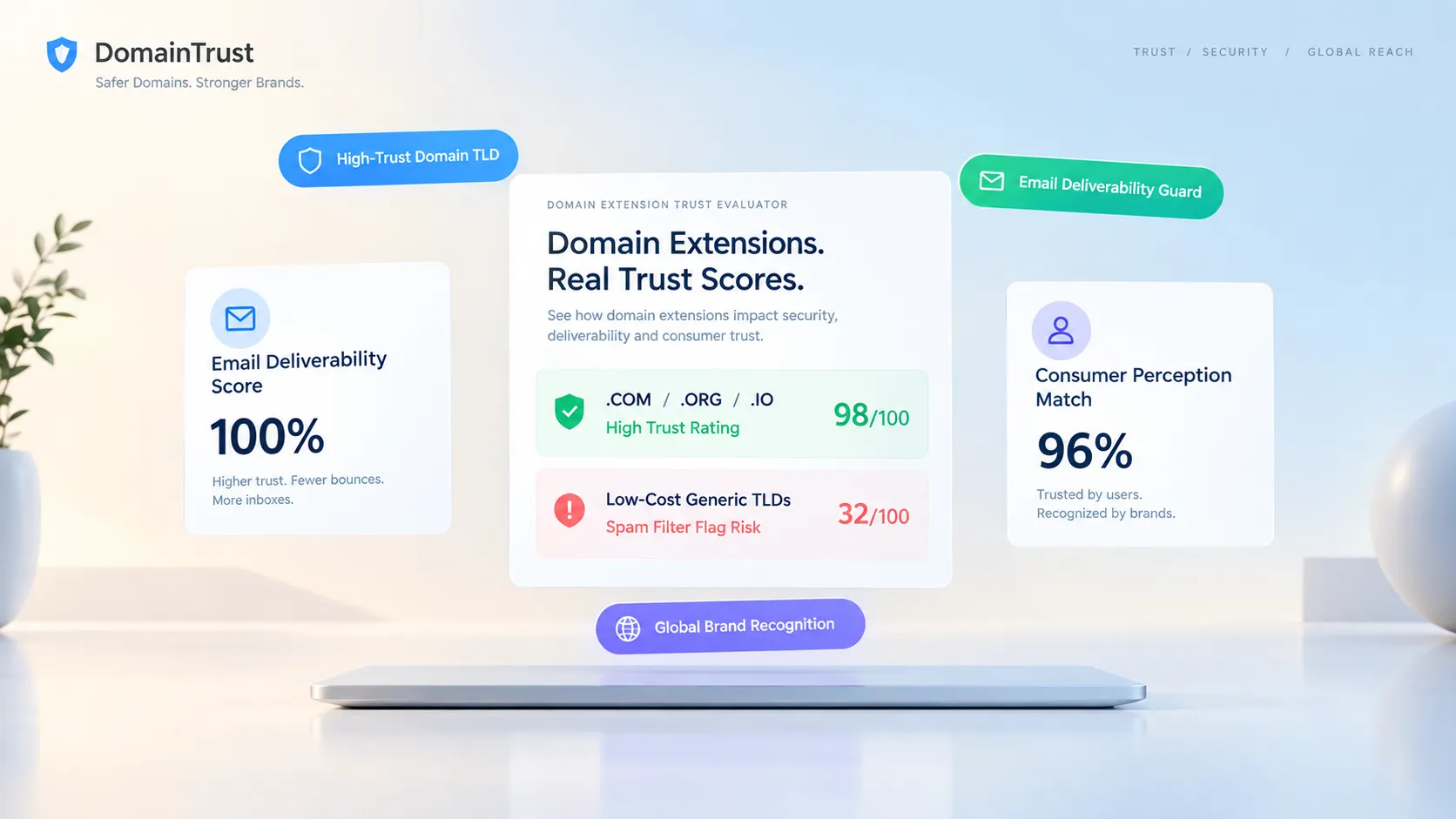
Visitors bring deep-seated psychological associations to familiar internet extensions.
Understanding these public expectations helps you evaluate popular domain extensions:
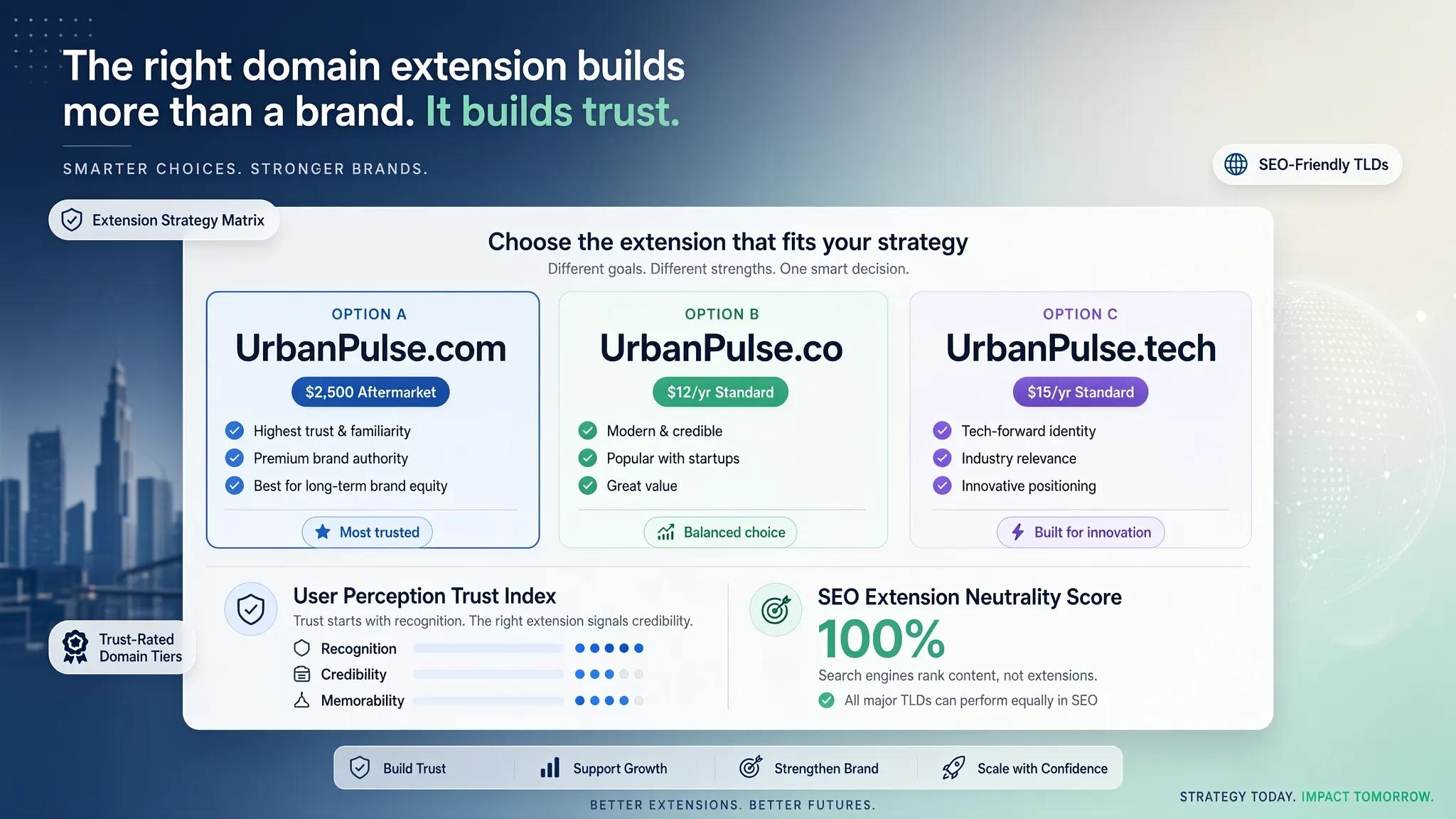
- .com vs .co: The .com extension remains the undisputed gold standard for online authority, holding the highest baseline trust worldwide. However, if your exact .com is unavailable, .com vs .co presents a strong alternative—especially across tech, design, and startup sectors that value a short, modern address.
- .com vs .net: Comparing .com vs .net reveals a sharp historical split. While .net was originally created for network infrastructure providers, .com dominated commercial retail. Today, commercial businesses choosing between the two almost always achieve higher brand recall with .com.
- .org vs .com: Evaluating .org vs .com comes down to business model. The .org extension instantly signals a mission-driven, non-commercial, or non-profit organization. Using .org for a direct-to-consumer e-commerce shop can create psychological confusion.
| Extension | Associated Brand Identity |
|---|---|
| .com | Established global leader & commercial standard |
| .co | Agile tech platform, modern agency, or startup |
| .org | Non-profit, association, or educational entity |
| .net | Technical infrastructure & networking provider |
4. Choose a Country-Code Domain Without Closing Off Future Markets
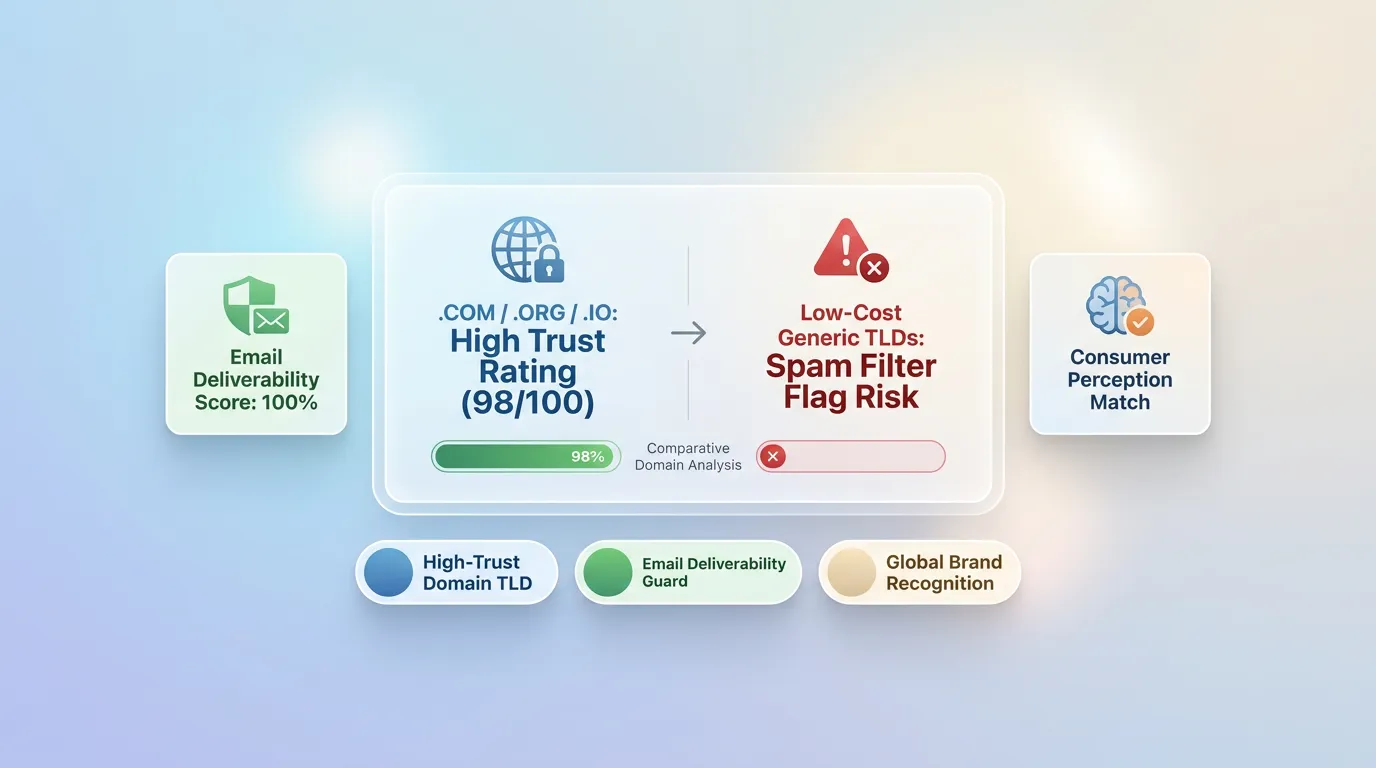
Using a country-code top-level domain (ccTLD)—such as .uk for the United Kingdom or .ca for Canada—instantly boosts trust with domestic buyers.
However, keep expansion plans in mind:
- Domestic Dominance: A ccTLD for business tells search engines and local property owners that your team operates right in their neighborhood.
- Global Scaling Hurdles: If you intend to expand into international markets next year, using a country-specific domain extension can make overseas prospects assume you don't serve their area.
Weighing local credibility against future market expansion protects your brand flexibility as you scale.
5. Know When a New Domain Extension Is a Smart Choice
If your exact brand name is unavailable on .com, descriptive new domain extensions offer innovative alternatives.
Evaluate descriptive suffixes based on market expectations:
- Industry-Specific Extensions: Options like .design, .tech, or .agency clarify what you do instantly.
- E-Commerce Alternatives: Suffixes like a .shop domain or .online domain work well for direct-to-consumer storefronts.
Treating alternative domain extensions as targeted choices rather than second-best compromises gives you creative options when securing your brand presence.
6. Check Whether the Extension Matches Your Business or Organization
Not every extension is open for public registration. Some top-level domains carry strict eligibility rules or industry restrictions.
Verify registration rules for specialized domain extensions for businesses:
- Restricted Suffixes: Suffixes like .edu, .gov, or .bank require verified institutional credentials before registration.
- Unrestricted Standards: While .org is traditionally used for non-profits, anyone can register one. However, respecting user expectations surrounding .org domain requirements prevents brand confusion.
Reviewing domain extension meanings ensures your choice aligns with legal regulations and buyer expectations.
7. Compare Availability Without Letting It Make the Decision for You
Discovering your preferred .com name is registered by someone else can be frustrating.
Avoid panic-buying an awkward, hyphenated alternative just to secure a .com suffix:
- • "the-best-plumber-tx.com"
- • Hard to speak out loud
- • Sends traffic to rivals
- • "PlumbCraft.co"
- • Short, clean, memorable
- • Modern brand authority
Checking domain extension availability across modern .com domain alternatives allows you to secure a clean, professional address even when your first-choice domain name taken status blocks you. For more on naming strategy, read our guide on what makes a good domain name.
8. Check the Registration Rules Before You Commit
Before attempting to buy a specialized country-code address, confirm whether you meet official registration requirements.
Check for common administrative hurdles:
- Local Presence Requirements: Some ccTLDs require a registered local business tax ID or physical office address within the country.
- Documentation Checks: Certain restricted domain extensions hold your domain in pending status until business documentation is verified.
Surface all domain registration requirements early to prevent administrative delays during launch.
9. Find Out What the Extension Means for SEO
A common digital myth claims that choosing a .com extension gives you an automatic, unfair ranking advantage on Google over other extensions.
Here is the plain truth regarding domain extension and SEO:
- Generic TLDs (.com, .co, .net, .org, .io): Search engines treat all generic extensions identically for organic indexing. A .co or .io page can rank just as high as a .com page.
- Country-Code TLDs (.uk, .ca, .de): Search engines use ccTLDs as strong geo-targeting signals, prioritizing your site in local domestic search results while making global ranking harder.
Understanding the real link between your best domain extension for SEO choices ensures you build organic traffic on solid technical ground (learn key setup steps in our guide on how to do SEO for a new website).
10. Check the Renewal Price and Long-Term Cost Before Buying
Beware of low introductory registration rates that conceal steep renewal price jumps in year two.
Calculate your complete operational commitment when evaluating domain extension prices:
While a standard .com domain typically costs $10 to $20 annually, specialized modern extensions can carry renewal tags of $50 to $100+ per year. Inspecting domain renewal cost disclosures protects your operating budget from unexpected recurring expenses. For broader cost analysis, read our guide on website hosting costs.
11. Protect Your Brand if Customers Might Type a Different Extension
What happens if a prospective client hears your brand name and accidentally types .com instead of your official .co extension?
Protect your company against brand confusion and lost leads:
- Defensive Registrations: If you operate on a newer extension, consider securing common variations to prevent competitors from squatting on your brand.
- Automatic 301 Redirects: Point secondary extensions straight to your main domain so every visitor lands on your primary storefront.
Executing a protect your domain name strategy secures your brand identity as your market awareness grows.
12. Register the Right Extension and Connect It to Your Website
Once you select the perfect extension, take immediate action to secure your digital presence before a competitor claims it.
Follow this execution sequence:
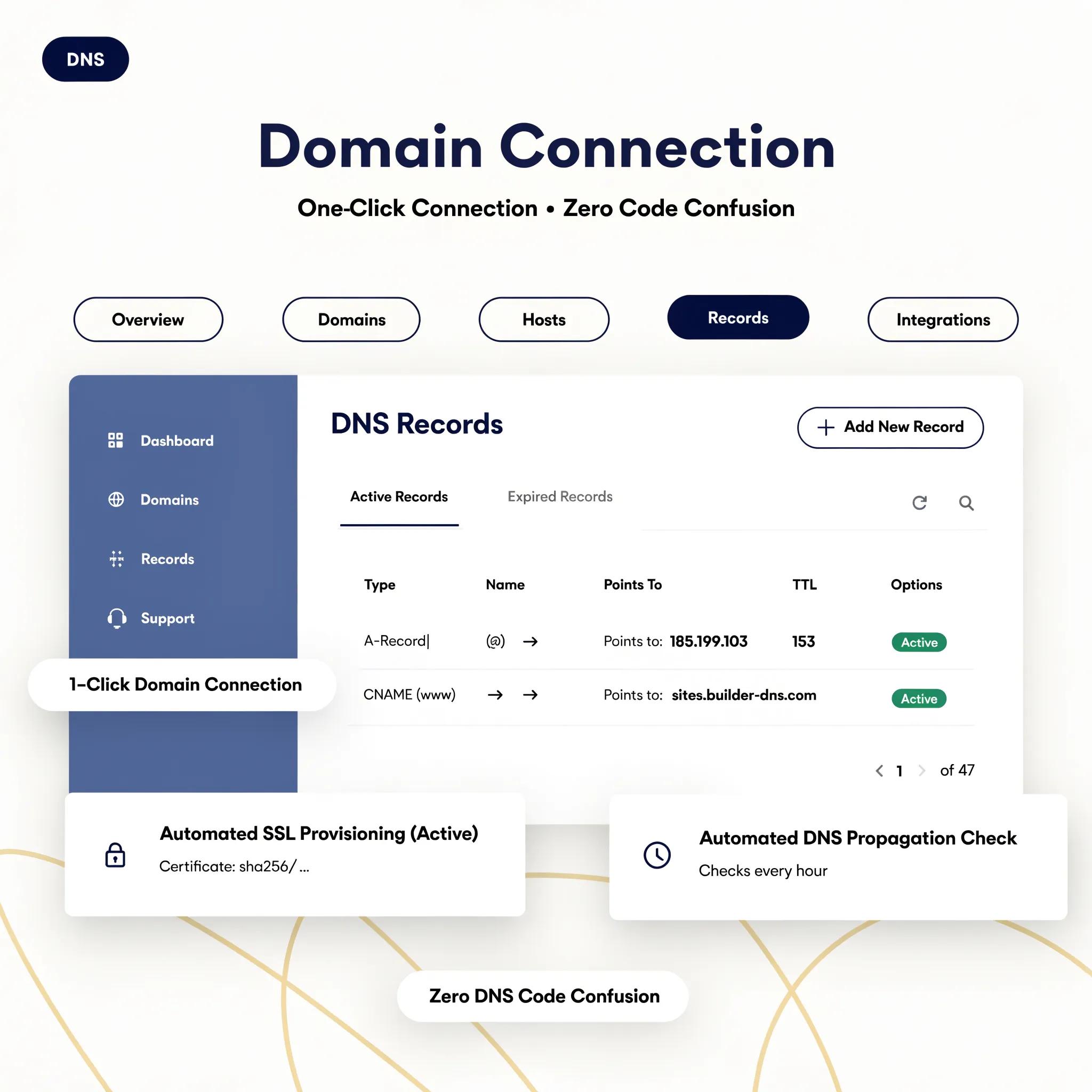
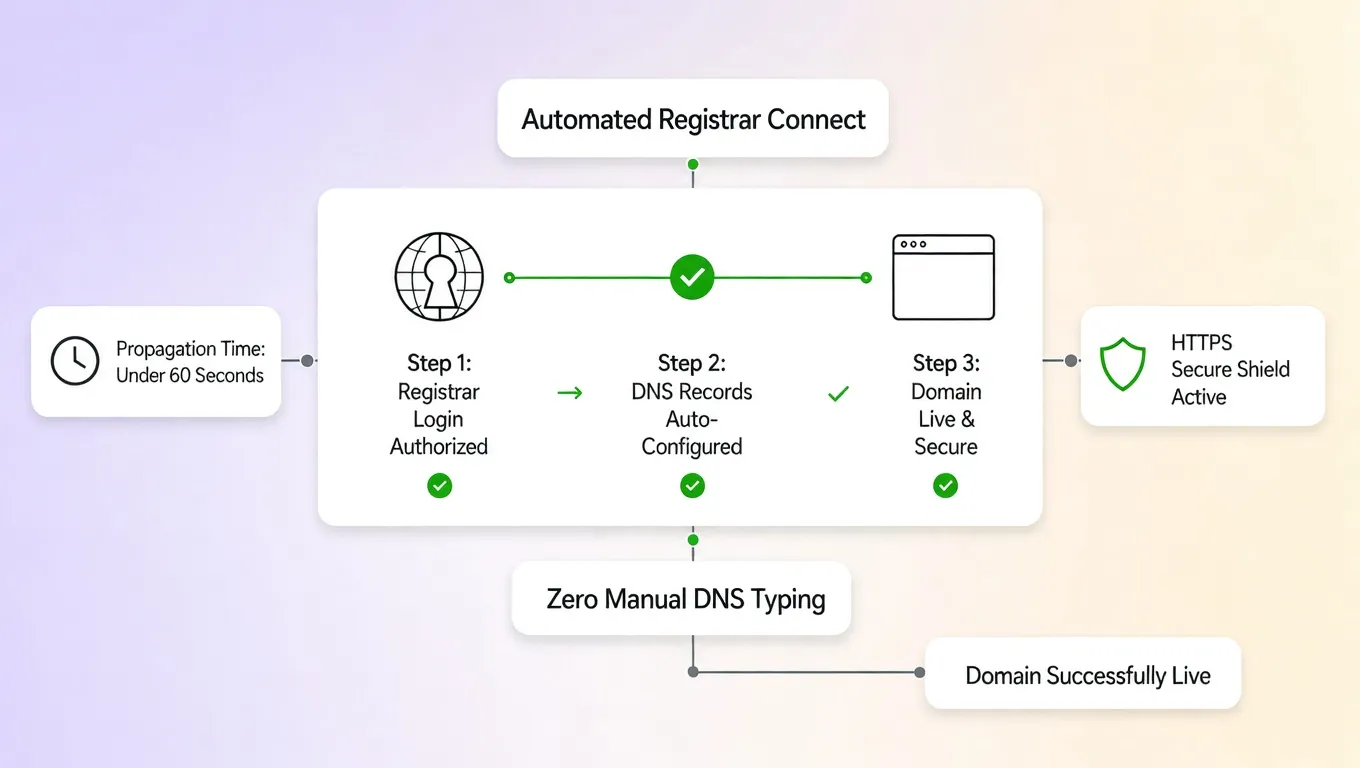
Secure Your Extension and Launch Today: Skip complex developer setups and hidden renewal fees. Buy a domain extension, build your high-converting storefront on BoltWeb, and start capturing qualified local clients in under 60 seconds! For DNS connection guidance, read our guide on connecting a domain to your website.
FAQs: How to Choose a Domain Extension
1. How to choose a domain extension that builds instant trust with local clients?
Here's the plain truth:
Choosing a domain extension isn't about grabbing the cheapest suffix available—it is about picking a top-level domain (TLD) that establishes immediate credibility, local authority, and brand recognition.
When choosing a domain extension, picking an obscure or awkward suffix can cause prospective clients to question your legitimacy before they even view your offer. When you launch your site on BoltWeb, you eliminate domain setup stress entirely. As an all-in-one business website builder, BoltWeb allows you to perform instant extension checks, connect your address, write search-optimized sales copy, and deploy a responsive storefront in under 60 seconds.
2. Should I choose a country-specific domain extension or a global TLD for my business?
Deciding whether your web address should signal local presence or global reach depends on your target market.
Apply the Job-to-Be-Done (JTBD) framework to evaluate your options:
- Local Service Operations: If you run a domestic trade or service business, using a country-specific domain extension or country-code domain signals immediate geographic relevance to nearby buyers.
- Borderless Digital Brands: If you sell software, online courses, or global consulting, selecting a domain extension for international business prevents artificial regional limits.
Aligning your TLD with your geographic reach ensures you build trust where your prospective clients live.
3. What is the difference between .com vs .co, .com vs .net, and .org vs .com?
Visitors bring deeply ingrained expectations to popular domain extensions across different business models:
- .com vs .co: While .com remains the gold standard for global trust, .co has emerged as a premier modern alternative for tech startups, creative agencies, and digital platforms.
- .com vs .net: .net was originally built for network infrastructure providers, whereas .com dominated commercial retail. For direct customer sales, .com delivers higher brand recall.
- .org vs .com: .org signals a mission-driven, non-profit organization. Using .org for a commercial e-commerce store creates psychological confusion for buyers.
4. Will using a country-code top-level domain limit my future international growth?
A country-code top-level domain (ccTLD)—such as .uk, .ca, or .de—instantly boosts trust with domestic clients.
However, consider long-term expansion plans:
- Domestic Dominance: A ccTLD for business tells search engines and local property owners that your team operates right in their neighborhood.
- Global Scaling Hurdles: If you plan to expand internationally next year, a country-specific suffix can make overseas prospects assume you don't serve their region.
Weighing domestic authority against future global scaling protects your brand flexibility as your company grows.
5. Are new domain extensions like .shop or .online a smart choice for a business?
When your exact .com address is registered by someone else, descriptive new domain extensions offer innovative alternatives.
Evaluating modern suffixes based on market intent:
- Industry-Specific Extensions: Suffixes like .design, .tech, or .agency clarify what your business does instantly.
- E-Commerce Alternatives: Suffixes like a .shop domain or .online domain work exceptionally well for direct-to-consumer online stores.
Treating alternative domain extensions as targeted choices gives you clean, professional options when securing your brand.
6. Are there specific eligibility rules for specialized domain extensions for businesses?
Not every domain extension is open for public registration without documentation.
Understanding registration requirements for specialized TLDs:
- Restricted Suffixes: TLDs like .edu, .gov, or .bank require verified institutional credentials prior to purchase.
- Unrestricted Standards: While .org is traditionally used for non-profits, anyone can register one. However, respecting .org domain requirements prevents public confusion.
Reviewing domain extension meanings ensures your web address aligns with regulatory rules and buyer expectations.
7. What should I do if my preferred name is taken across domain extension availability checks?
Discovering that your ideal .com name is owned by someone else can be frustrating, but panic-buying an awkward hyphenated name is a costly mistake.
How to handle a domain name taken scenario:
- Avoid Clunky Hyphens: Addresses like the-best-plumber-dallas.com look cheap, are difficult to speak out loud, and send traffic to competitors.
- Select Clean Alternatives: Exploring domain extension availability across modern .com domain alternatives like .co or .io delivers a clean, modern web address.
8. What legal or residency rules apply to country-code domain registration?
Before committing to a specialized country-code address, confirm whether you meet official registration rules.
Check for administrative hurdles:
- Local Business Presence: Certain ccTLDs require a registered local tax ID or physical business address within the country.
- Documentation Audits: Some restricted domain extensions hold domains in pending status until business documentation is verified.
Reviewing domain registration requirements early prevents administrative delays during launch under strict country-code domain registration guidelines.
9. Does domain extension affect SEO rankings on Google?
A common myth claims that choosing a .com extension gives you an automatic, unfair ranking advantage on Google over other extensions.
Here is the plain truth regarding domain extension and SEO:
- Generic TLDs (.com, .co, .net, .org, .io): Google treats all generic extensions identically for organic indexing. A .co page can rank just as high as a .com page.
- Country-Code TLDs (.uk, .ca, .de): Search engines use ccTLDs as strong geo-targeting signals, prioritizing your site in local domestic search while making global ranking harder.
Understanding how to choose the best domain extension for SEO ensures your storefront builds organic search traffic on solid technical ground (learn more in our guide on how to do SEO for a new website).
10. How do I calculate total domain extension prices and long-term renewal costs?
Beware of low introductory registration rates that conceal steep renewal price jumps in year two.
Calculate your complete financial commitment when evaluating domain extension prices:
While a standard .com domain typically costs $10 to $20 annually, specialized extensions can carry higher renewal rates. Inspecting domain registration cost and domain renewal cost disclosures protects your operating budget.
11. How do I protect my brand if customers accidentally type a different domain extension?
What happens if a client hears your brand name and accidentally types .com instead of your official .co extension?
Protect your business against brand confusion and lost leads:
- Defensive Registrations: Consider securing common suffix variations to protect your domain name against competitors or squatters.
- Automatic Redirects: Point multiple domain extensions straight to your main URL so every visitor lands on your primary storefront.
Executing a proper domain name brand protection strategy secures your brand identity as market awareness grows.
12. What are the final steps to buy a domain extension and launch my website?
Once you select the ideal extension for your business, take immediate action to secure your web address and launch your storefront:
- Verify Extension Availability: Enter your preferred name into BoltWeb to perform an instant availability check.
- Complete Domain Registration: Register a domain name or buy a domain extension through an accredited registrar or directly inside your platform account.
- Connect to Your Builder: Connect your address to BoltWeb using a simple two-line DNS configuration, and launch a search-optimized, lead-ready storefront in under 60 seconds!